The ancient Silk Road was a vast network of trade routes. It connected the East and West, sharing goods, ideas, and cultures. This system changed world history, boosting global commerce and cultural exchange.
The Silk Road deeply influenced the ancient world’s economy and society. Goods moved along these routes, not just for trade but also for sharing new technologies, beliefs, and art.
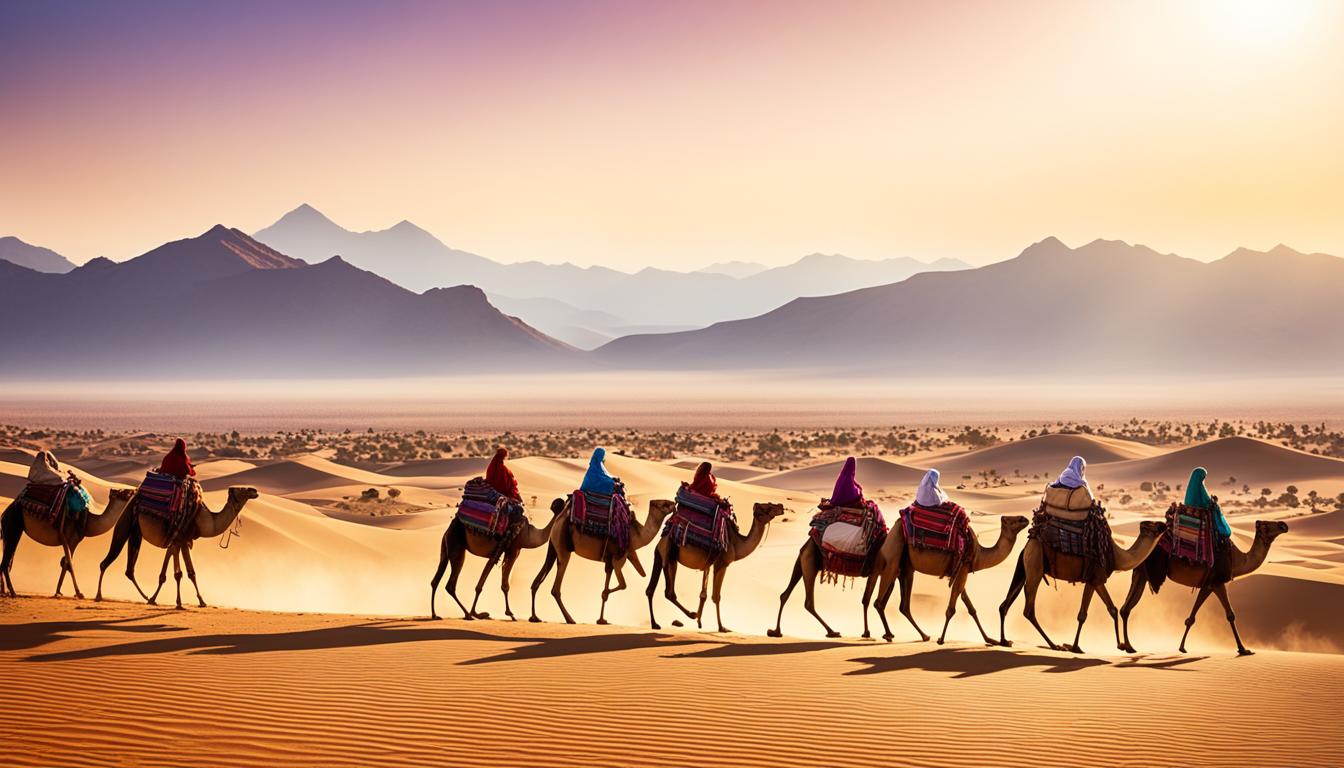
Caravans full of luxuries like silk and gems traveled these paths. Brave explorers faced the tough terrain. The Silk Road brought together different cultures, creating new identities. This exchange shaped the ancient world’s arts, architecture, and traditions. Today, we still admire and draw inspiration from these.
Unveiling the Ancient Silk Road’s Legacy
The Silk Road started in the Han Dynasty in China and the Roman Empire in the West. It was born from a desire for luxury goods and a need for cultural exchange. This network changed the ancient world into a global marketplace.
Origins: The Catalyst for Global Connectivity
The Silk Road began during the Chinese Han Dynasty. They wanted to grow trade and diplomatic ties with the West. The need for Chinese silk and luxury items led to caravans crossing the tough terrain.
This network of routes did more than just exchange goods. It also shared cultures, religions, and technologies. This helped create a global connection.
Traders and Explorers: Pioneers of a Global Marketplace
The Silk Road’s success came from brave traders and explorers. They connected distant civilizations. Figures like Zhang Qian and Marco Polo were key in shaping its legacy.
They didn’t just move goods. They also shared ideas, innovations, and traditions. This turned the ancient world into a global marketplace. It also set the stage for today’s interconnected world.
The Silk Road’s Impact on Cross-Cultural Exchange
The ancient Silk Road was more than just a trade route. It was a key way for sharing ideas, technologies, and cultural traditions over vast distances. This network helped spread culture and ideas far and wide, changing the course of civilizations.
The Silk Road was a key spot for moving goods, people, and knowledge. Those who traveled it brought their cultures, art, and new ideas. This mix of cultures led to new traditions that were unique and fresh.
Buddhist teachings mixed with local beliefs on the Silk Road, creating something new. Buddhist monks and texts traveled far, blending with local beliefs. This led to new forms of Buddhist art and practices in places like Central Asia and China.
The Silk Road also shared artistic traditions, moving techniques and styles over long distances. Today, we see this in the beautiful textiles, ceramics, and paintings from that time. They show how cultures came together along the Silk Road.
The Silk Road changed how cultures interacted, shaping the world we know today. Its impact is still seen in the cultural ties and shared heritage of people once connected by it.
Traversing the Treacherous Terrain
Traveling the ancient Silk Road was a big challenge. Traders and explorers faced many dangers as they crossed Eurasia. They had to go over high mountains and through huge deserts. This made their journey tough and risky.
Challenges and Dangers: Braving the Unknown
The Silk Road was full of tough obstacles. Extreme weather, like very hot and cold, was a big threat. Travelers had to be very skilled and strong to cross the steep mountains safely.
Bandits and raiders were another big danger. They wanted to steal the valuable goods being carried. Travelers had to always be ready to protect themselves and their goods.
Even with all these dangers, many people wanted to travel the Silk Road. They were drawn by the chance to make money and meet new cultures. Their bravery helped make the Silk Road a symbol of human strength and global connection.
Goods and Commodities: Fueling Global Commerce
The ancient Silk Road was famous for its wide variety of traded goods. These ranged from everyday items to luxury goods. This network of trade routes helped exchange products, shaping the global economy and cultural ties between East and West.
Luxury Trades: Silk, Spices, and Precious Gems
Luxury items like silk, spices, and precious gems were highly sought after on the Silk Road. Silk came from China and was a symbol of wealth and status. It was highly valued in both Eastern and Western societies, leading to a thriving trade.
Spices like black pepper, cinnamon, and nutmeg were crucial. They were used for cooking and medicine, and were rare and exclusive. Precious gems, including jade, emeralds, and rubies, were also key to the luxury trade.
These gems were prized for their beauty. They helped in the cultural and artistic exchange. They were used to make jewelry and decorative items.

The trade of these luxury goods greatly impacted the Silk Road’s economies and societies. Cities like Samarkand, Bukhara, and Chang’an became centers of commerce. They attracted merchants, artisans, and scholars from all over.
This trade helped grow prosperous city-states, empowered rulers, and created a vibrant cultural scene. It continues to inspire us today.
The History Silk Road: A Melting Pot of Civilizations
The ancient Silk Road was more than just a trade route. It was a bridge for sharing ideas, cultures, and traditions. Merchants, scholars, and travelers moved through tough terrain, sharing their cultures. This led to a mix of art, architecture, and traditions.
Cultural Fusion: Arts, Architecture, and Traditions
The Silk Road was a key place for mixing different cultures. Goods moved along the routes, taking with them art and architectural styles. This mix led to new and creative forms, blending East and West.
Art along the Silk Road showed the beauty of different cultures. Paintings, sculptures, and textiles mixed Persian, Chinese, and Greco-Roman styles. Buildings also showed this mix, with designs from Islamic, Buddhist, and Zoroastrian traditions.
Culture wasn’t just in art and buildings. Food, music, dance, and even religious rituals were shaped by the Silk Road. This created a rich cultural scene that still interests scholars and fans today.
The Silk Road’s lasting impact shows how culture can change and grow through sharing. It brought together many traditions, creating a rich cultural heritage. This heritage still inspires and amazes people around the world.
Empires and Kingdoms: Rulers of the Silk Road
The Silk Road was more than a trading network; it was a stage for empires and kingdoms fighting for power. From the Han Dynasty in China to the Kushan Empire in Central Asia and the Byzantine Empire in the West, rulers and dynasties sought to dominate this key trade route. Their struggles shaped history along the Silk Road.
The Han Dynasty ruled China from 206 BCE to 220 CE. They were early and influential in the Silk Road. Under leaders like Han Wudi, they expanded their empire and set up garrison towns. These towns helped keep goods safe and made the Han a major force in the region.
Further west, the Kushan Empire thrived from the 1st to the 4th century CE. This empire was a melting pot of cultures, thanks to the nomadic Kushans. They united various kingdoms, making their empire a hub for exchanging goods and ideas between East and West.
In the Byzantine Empire, leaders like Justinian I saw the Silk Road’s value. They used diplomacy and military strength to gain control of the silk and spice trades. This competition with the Sassanid Persians and others shaped the region’s politics and economy.

The rise and fall of these empires show how the Silk Road’s power changed over time. These rulers often became very wealthy and famous, leaving a lasting mark on history.
Religious Diffusion along the Ancient Trade Routes
The Silk Road was a vast network of trade paths that linked the East and West. It spread not just goods, but also ideas, beliefs, and religious practices. Merchants, pilgrims, and missionaries moved along these paths, bringing major world religions like Buddhism, Islam, and Christianity to new lands.
Buddhism, Islam, and Christianity: Spiritual Tapestry
These religions spread along the Silk Road, creating a rich spiritual landscape. Buddhism started in India and grew in Central Asia, blending with local customs. Islam came from Arab traders and spread fast, creating communities and changing religious practices.
Christianity also traveled the Silk Road, with Nestorian and Syriac Christians forming communities in Central Asia, China, and the Middle East. This mix of beliefs led to a vibrant spiritual tapestry. Elements of silk road religions, including Buddhism, Islam, and Christianity, influenced each other.
The Silk Road’s religious spread changed the spiritual scene and had big social, cultural, and economic effects. It led to a better understanding and respect for different beliefs. This helped start cross-cultural talks and work that shaped history for many years.
Legacy of the Silk Road: Enduring Influence
The Silk Road’s impact is still seen today, shaping global trade and cultural exchange. Its legacy shows how different civilizations were connected. This ancient trade network’s remnants remind us of its power.
Modern-Day Remnants and Resurgence
Efforts to preserve old routes and new projects like the Belt and Road show the Silk Road’s lasting impact. China leads this project, aiming to update the Silk Road for today. It aims to link countries across the globe, boosting economic and cultural ties.
The Silk Road’s legacy lives on in ancient buildings, art, and the sharing of ideas. These remind us of the importance of working together across cultures. They also highlight how global connections can change the world for the better.