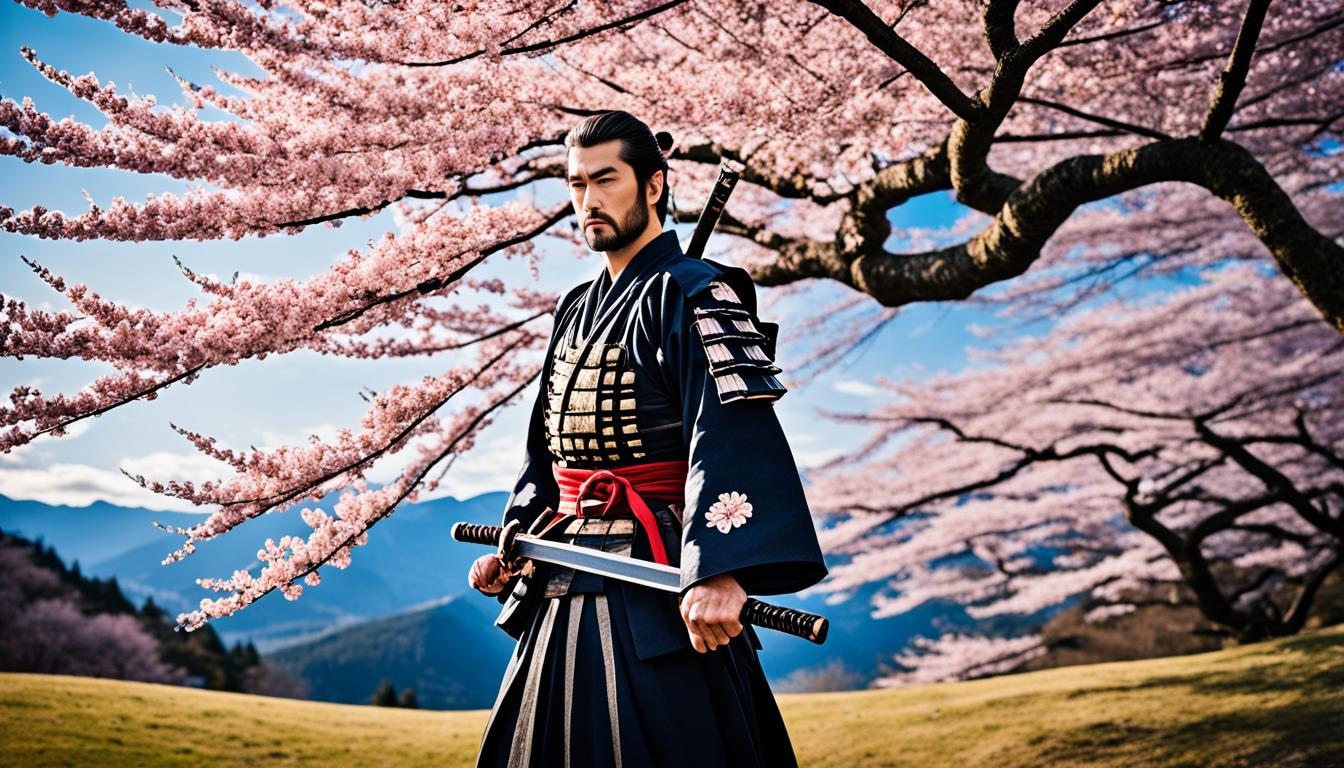
The samurai were Japan’s top warriors, leaving a lasting impact on the country’s culture for many years. Their strong code of honor, called Bushido, and their art have won the world’s admiration. This piece looks at how the samurai changed Japanese society and the world’s view of them.
The samurai followed strict rules of loyalty, honor, and sacrifice. They also excelled in arts like literature, poetry, and martial arts. Their influence on Japan’s culture is still felt today, inspiring people all over the globe.
We’ll dive into their stories, military tactics, and symbols. These elements show why the samurai are so important in history and culture.
Decoding the Samurai’s Cultural Legacy
The samurai were more than just skilled fighters. They were the heart of Japan’s rich cultural heritage. At the core of this was Bushido, a strict moral code that guided their lives.
Bushido: The Warrior’s Code
Bushido, or “Way of the Warrior,” was a set of ethics and values. It shaped how samurai saw the world and acted. It focused on honor, loyalty, and self-control. This code made samurai ready to give their lives for their lord and beliefs.
This code was not just a rule. It was a key part of who they were.
Artistic Expressions of Samurai Life
The samurai’s impact went beyond fighting. It showed in their art. Poetry, calligraphy, and the tea ceremony were their ways to express beauty and thought.
These arts showed their deep thinking and spiritual side. They left a lasting mark on Japanese culture.
The samurai’s legacy is a big part of Japanese culture. It shows the strength of their honor code and their love for art and thought.
The Samurai’s Enduring Influence on Japanese Society
The samurai warrior class left a lasting mark on Japanese culture and identity. Their values and traditions still shape society today, even after they faded away. This shows how deep their impact is.
The samurai’s focus on honor, discipline, and loyalty has become a big part of Japan’s identity. These values, known as Bushido, have spread beyond the warrior class. They now influence many parts of life, from how people act in business to their personal lives.
This samurai influence is clear in Japan’s culture. It’s seen in the respect for others, the importance of hierarchy, and striving for perfection. These values are key to Japanese life.
The samurai also left their mark on Japanese art. Calligraphy, traditional gardens, and the tea ceremony show their love for beauty. Martial arts like judo, kendo, and aikido keep their physical and spiritual traditions alive.
The samurai’s impact on Japan is huge. Their values and traditions are still celebrated and respected. They help shape how Japanese people see themselves and the world. The samurai’s legacy is a big part of Japan’s identity, showing the lasting effect they had on culture.
Preserving Samurai Traditions in Modern Times
In today’s fast world, the samurai’s ancient traditions still capture our hearts and minds. These traditions have lasted for centuries. Many are working hard to keep their cultural heritage alive.
Martial Arts and Spiritual Disciplines
Leading this effort are the samurai’s martial arts. Kendo and iaido are still practiced, keeping the samurai’s warrior spirit alive. These arts show the samurai’s strength and their deep spiritual and philosophical beliefs.
Along with martial arts, the samurai’s spiritual practices are still studied and respected. Zen Buddhism taught them about meditation and inner strength. Now, Zen temples and monasteries attract those seeking a connection to the samurai’s past.
By keeping these martial and spiritual practices alive, we ensure the samurai’s spirit stays with us. As the world changes, the samurai’s legacy shows us the lasting impact of tradition and the human spirit.
The Global Fascination with Samurai Culture
The samurai’s legacy has won the hearts of people all over the world. It goes beyond Japan, reaching out to everyone. Through movies and books, the samurai stand for honor, discipline, and a unique warrior’s code. They have become a global symbol of these values.
Samurai in Film and Literature
Samurai have made a big mark in popular culture. Movies like “Seven Samurai,” “The Last Samurai,” and “Crouching Tiger, Hidden Dragon” show their elegance and loyalty. These films have made people appreciate the samurai’s lifestyle and the bushido code they lived by.
Literature has also played a big role in sharing samurai culture. Books like James Clavell’s “Shogun” and Eiji Yoshikawa’s “Musashi” tell stories of strategy and honor. They’ve made people interested in the samurai and their culture.

People all over the world are drawn to samurai culture. This interest has made us value their history and traditions more. The samurai’s impact on art, literature, and movies shows how powerful their legacy is.
Exploring the Mythology of the Samurai Warrior
The samurai have always fascinated people worldwide with their deep mythology and legendary stories. These stories are a big part of Japanese culture. They have shaped how people see the samurai as symbols of honor, discipline, and sacrifice.
One famous samurai myth tells of a noble warrior who follows the Bushido code. These samurai are known for their loyalty to their lord, their skill in martial arts, and their readiness to give up everything for their beliefs. Their stories of bravery and last stands have made them legendary, inspiring many.
Another lasting myth is about the rōnin, samurai without a lord. They wander, looking for a new purpose or seeking revenge for a past injustice. These tales often talk about honor, finding redemption, and searching for meaning in a changing world. The rōnin’s story is a powerful symbol of human struggles and hopes.
These stories have not only shaped our view of samurai but also made us all more interested in their culture. The tales of samurai warriors, focusing on honor, loyalty, and sacrifice, still grab our attention. They inspire new works in art, literature, and film, keeping the samurai as a key symbol of Japanese culture.
Culture: The Samurai’s Lasting Impact
The samurai’s impact on Japanese culture is huge and still felt today. These elite warriors were not just fighters; they were also scholars. They left a mark that shapes Japan’s culture in many ways, from social norms to art.
The samurai’s code, Bushido, or the “Way of the Warrior,” is key to their lasting influence. This code taught honor, loyalty, and discipline. It changed how the samurai fought and how they created art, like the beauty of Japanese gardens and martial arts.
Today, people all over the world are still drawn to the samurai’s culture. Their unique armor and famous swords have inspired art, books, and movies. This shows how the samurai have become a big part of Japan’s cultural heritage.
Even as the world changes, the samurai’s legacy stays strong. They remind us of the values that make Japan what it is. The samurai show us the lasting power of tradition, honor, and striving for the best.
The Samurai’s Role in Shaping Japanese Identity
The samurai deeply influenced Japanese identity. These warriors left a lasting mark on the country’s military and culture. They shaped the values of the Japanese people.
Their legacy includes honor, loyalty, and the readiness to sacrifice. These values are now a big part of Japanese society.
Honor, Loyalty, and Sacrifice
The samurai’s strong commitment to honor and loyalty was key to their code, Bushido. This code taught the importance of serving one’s lord with total dedication, even if it meant giving up everything. This idea has deeply influenced how Japanese people live their lives.
They value duty, discipline, and a sense of responsibility to their community and country. This comes from the samurai’s teachings.
The samurai’s readiness to sacrifice for their beliefs has deeply affected Japanese identity. The act of seppuku, or honorable suicide, shows their commitment to their principles. This respect for sacrifice still shapes Japanese culture today, affecting business and personal relationships.

The samurai’s impact goes beyond the military and politics. Their cultural and artistic contributions, like calligraphy and Zen Buddhism, have shaped Japan’s culture. These arts show the deep influence of the samurai on Japanese culture.
Examining the Samurai’s Military Strategies
The samurai were known for their strong honor code and discipline. They were also famous for their military skills. These warriors spent centuries perfecting their battle tactics. This made them a powerful force on the battlefield.
At the core of their success were their military tactics. They were great at close combat, using weapons like the katana with great skill. Their strategies, including tactics and psychological games, helped them beat their enemies.
The samurai didn’t just fight on the battlefield. They were also experts in siege warfare. They used advanced tactics and engineering to take over strongholds. Their ability to change their strategies helped them stay on top for centuries.
The samurai’s impact goes beyond Japan. Their military strategies have shaped modern tactics in warfare and business. Scholars and leaders still study their combat and decision-making. This offers insights into leadership, strategy, and excellence.
Samurai Weaponry and Armor: Symbols of Culture
The samurai’s weapons and armor were more than just for fighting. They were deep symbols of their culture and beliefs. The katana, a legendary sword, was a key symbol of the samurai. It showed their commitment to Bushido, their code of honor.
The Katana: A Legendary Blade
The katana was a masterpiece, not just a tool for battle. It showed the samurai’s strong spirit and their heritage. Making a katana was a detailed process, with swordsmiths using old techniques.
These techniques gave the katana strength, flexibility, and beauty. The katana’s design was not just for looks. It was a sign of the samurai’s respect for their craft and their way of life.
The katana meant a lot to the samurai, beyond fighting. It was seen as a part of the warrior’s spirit. It showed their bravery, discipline, and honor.
Samurai took great care of their katana. They saw it as a sacred part of who they were. Today, the katana still inspires people around the world. It’s a symbol of the samurai’s lasting impact on culture.
Samurai Castles: Architectural Marvels
The samurai warriors of Japan built amazing castles that still amaze people today. These castles were more than just military bases. They showed the culture and beauty of the samurai class.
The design and engineering of these samurai castles show the great skill and care in building them. They were built on high places to last through attacks and to see far. Every part, from the stone walls to the detailed gates and towers, was made with a purpose.
These castles were not just for fighting. They were also symbols of the cultural significance of samurai fortresses. Inside, you could find beautiful interiors, gardens, and art. These showed the samurai’s love for beauty and art, which was part of Japanese life. Now, these castles draw in visitors, letting them feel the samurai’s lasting impact.